Three Days in Marrakesh with the Leica Q3
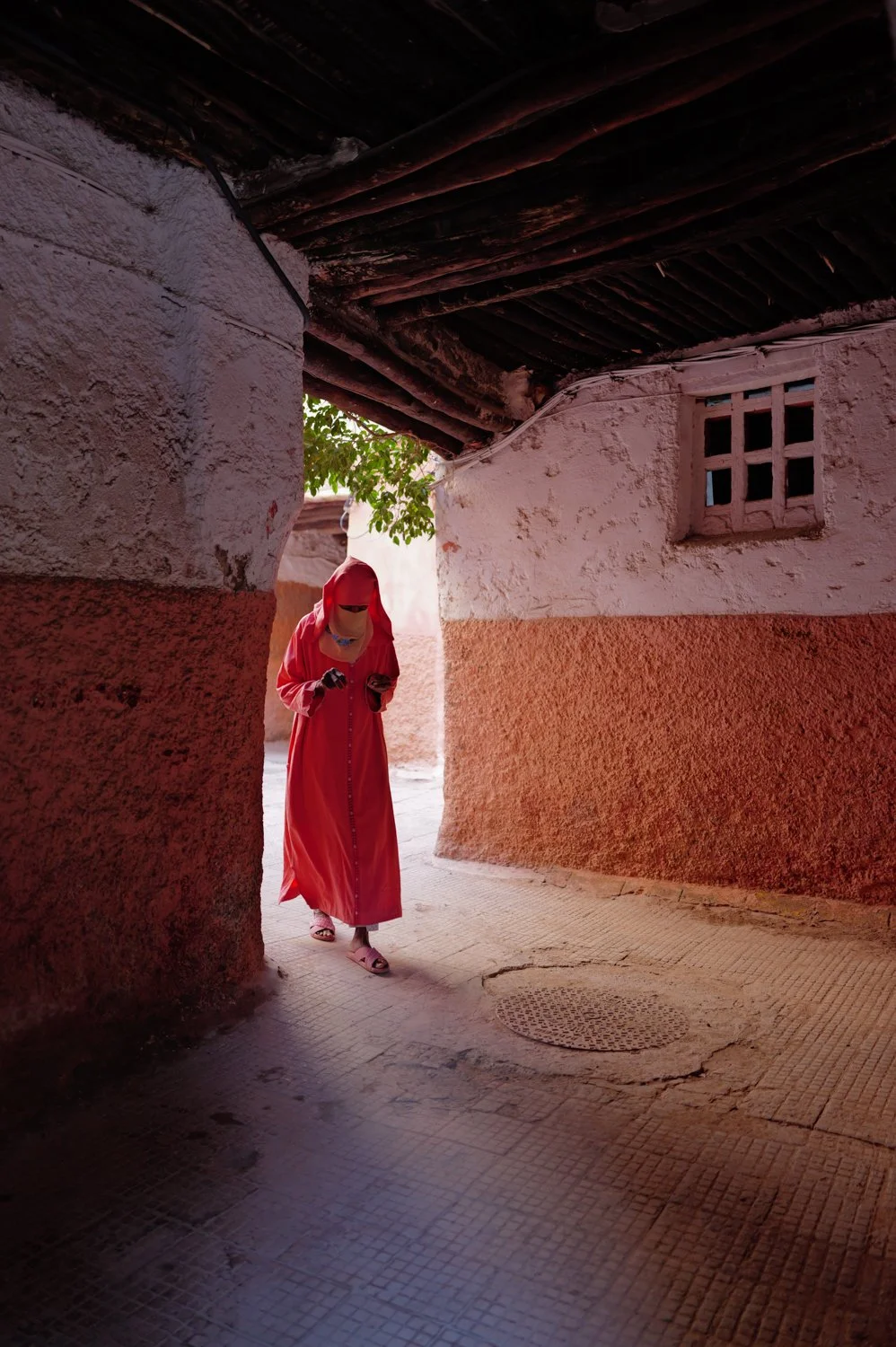
What, Why and How.
Needed a short break from the day-to-day hassle. Chose a short 3 day trip to Morocco. That's the “Why”. The rest of the post is about the “What” and the “How”. Photos along the article.
Photographing Marrakesh is, for me, all about five things: curiosity, patience, deception, physical resistance and focus.
It is not an easy city to photograph. But that is precisely what makes it so interesting.
I spent three days walking through Marrakesh with one main objective: to photograph. I was not there to tick monuments off a list, to spend hours sitting in cafés, or to follow the usual tourist routes. I wanted to disappear into the city as much as possible, observe what was happening around me, find the right light, and wait for the right people to enter the frame.
Curiosity
The Medina immediately rewards curiosity.
The main streets are fascinating, but they are also crowded with tourists, shops and constant movement. For the kind of photographs I was looking for, I often found the most interesting places somewhere else.
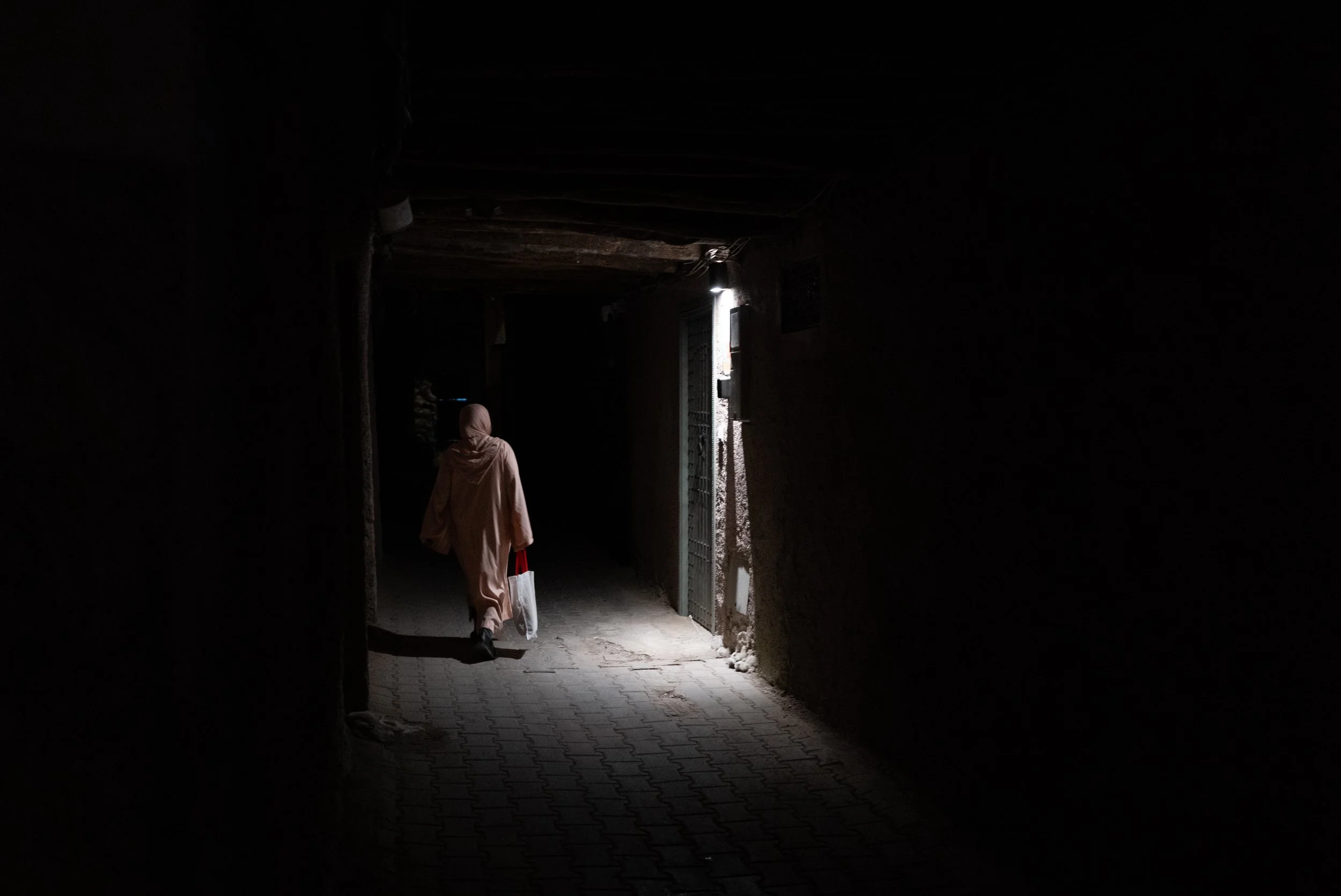
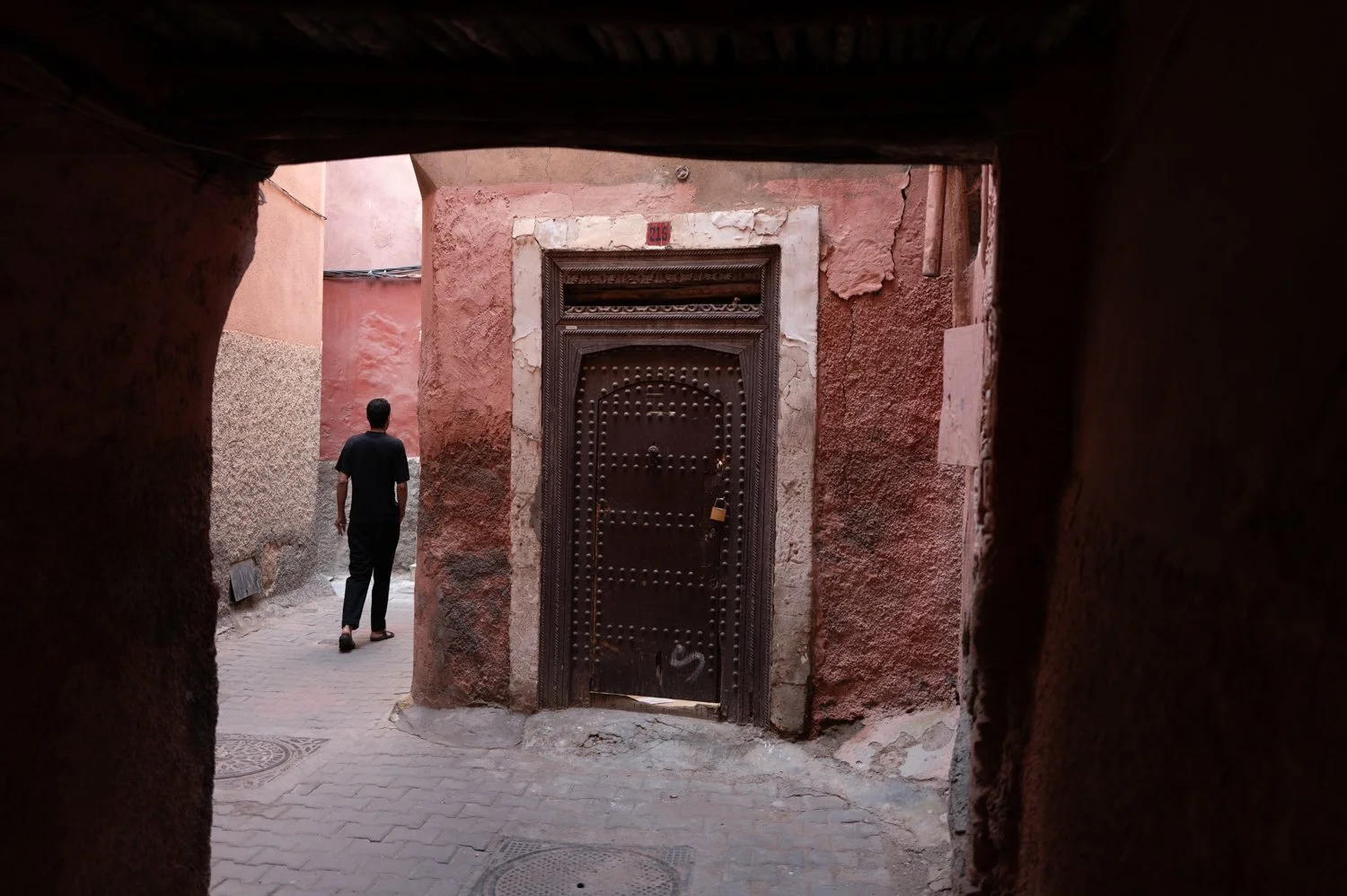
Whenever I saw a small alley leading away from one of the main Medina streets, I wanted to know what was there.
So I followed it.
Not recklessly. I would go as far as I felt comfortable going without risking getting completely lost or wandering into an area where I felt I should not be.
But those little detours were often where the best scenes appeared.
Suddenly there were no tourists.
Just local life.
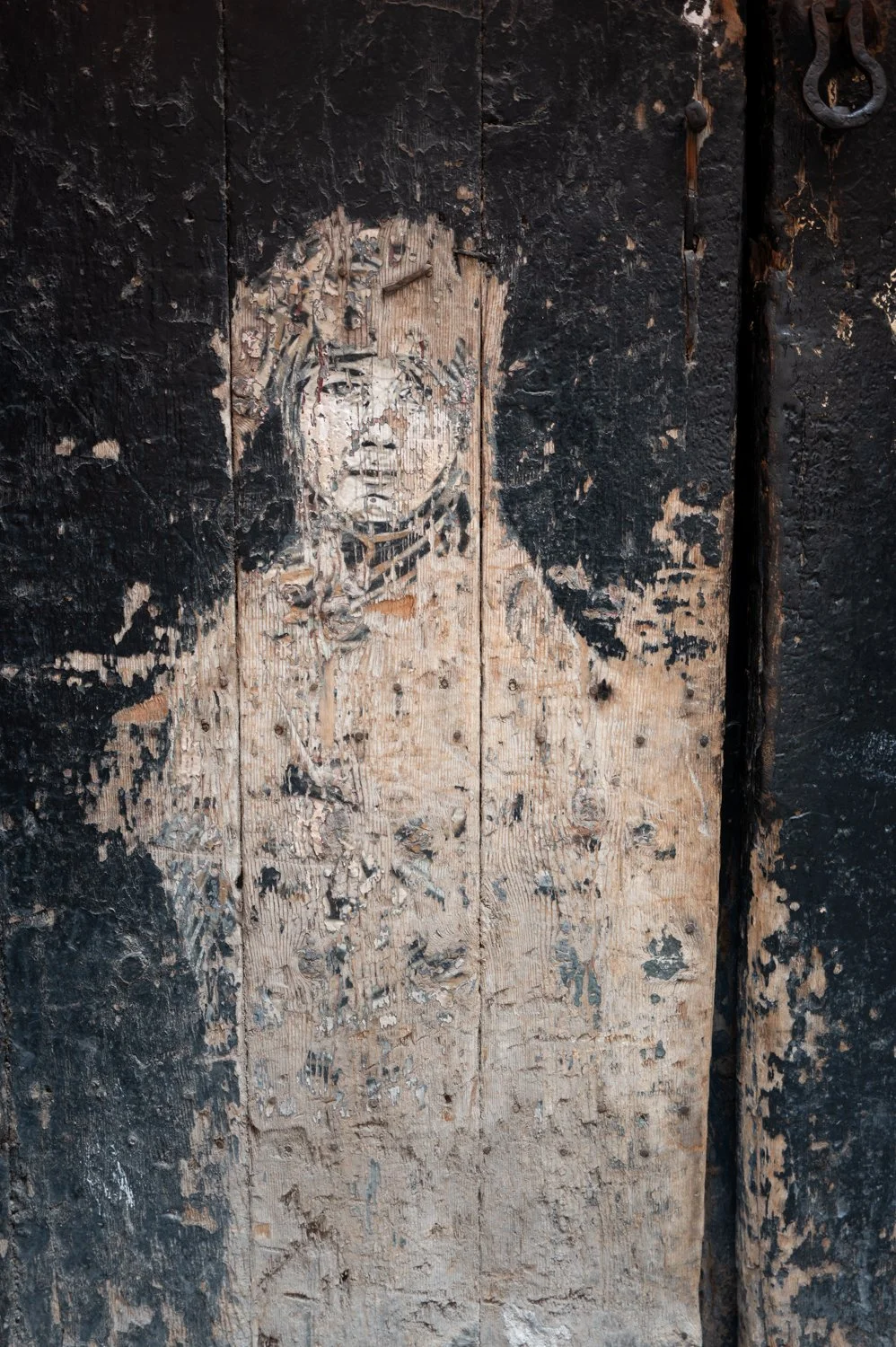
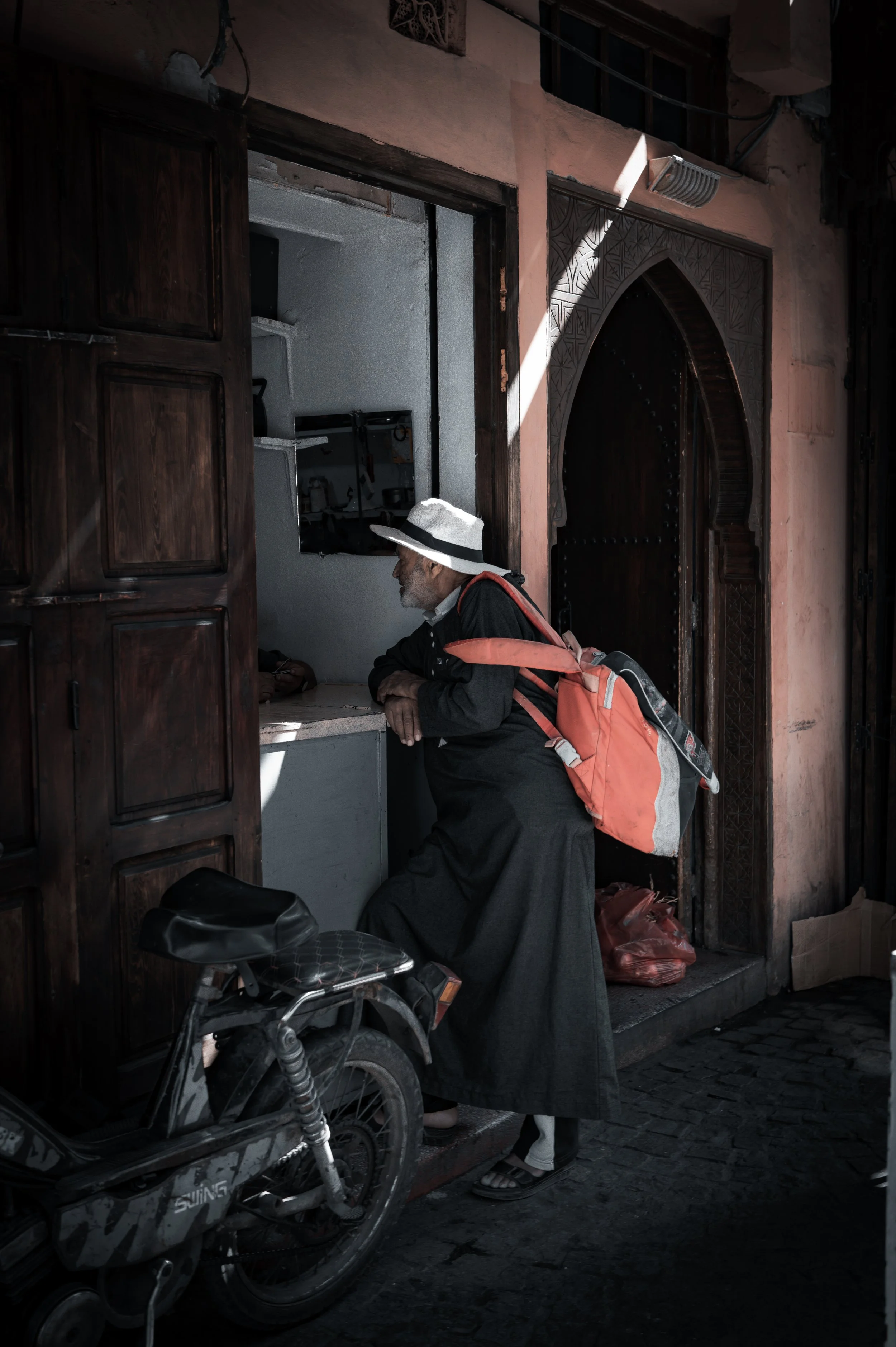
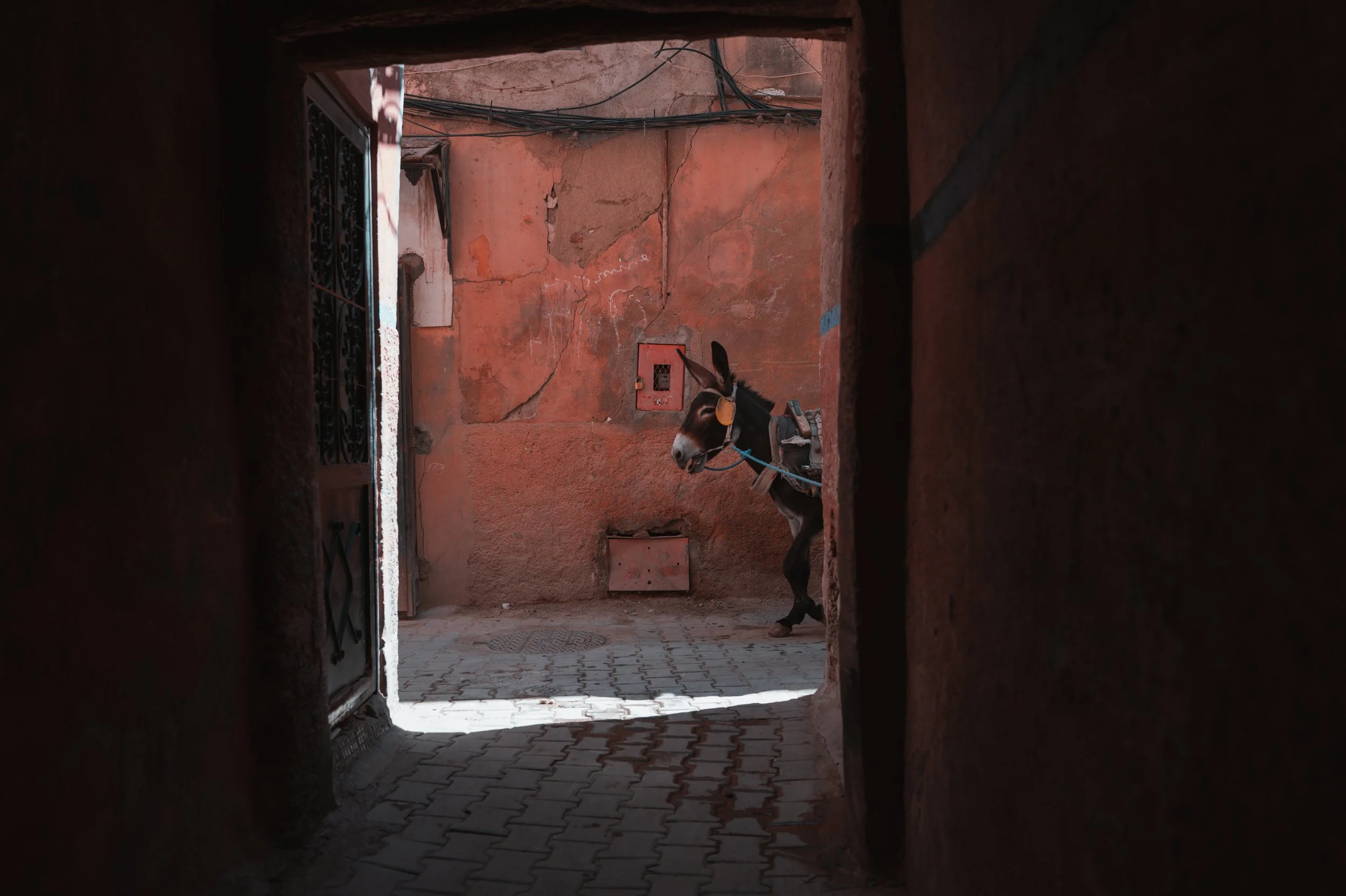
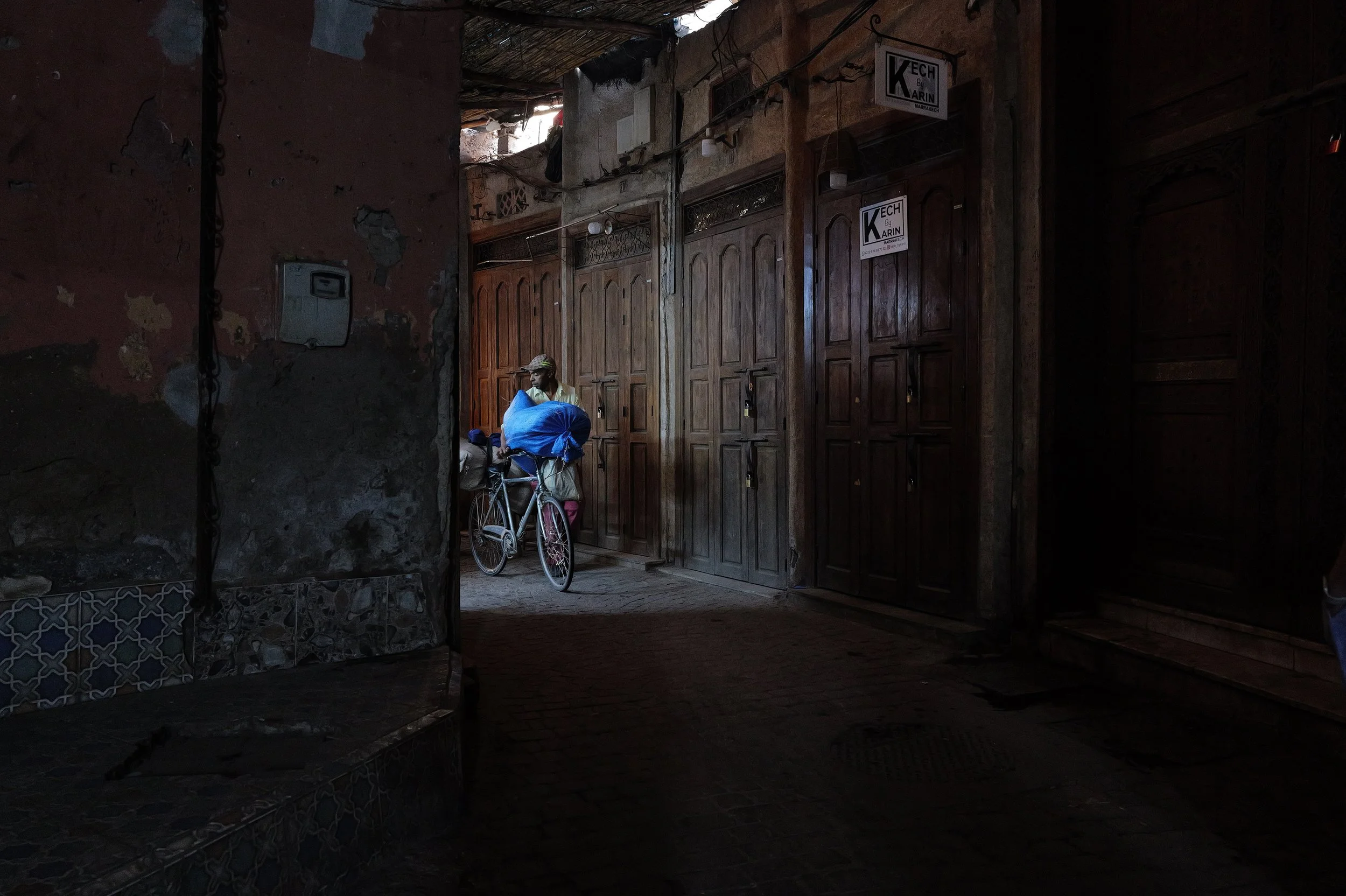
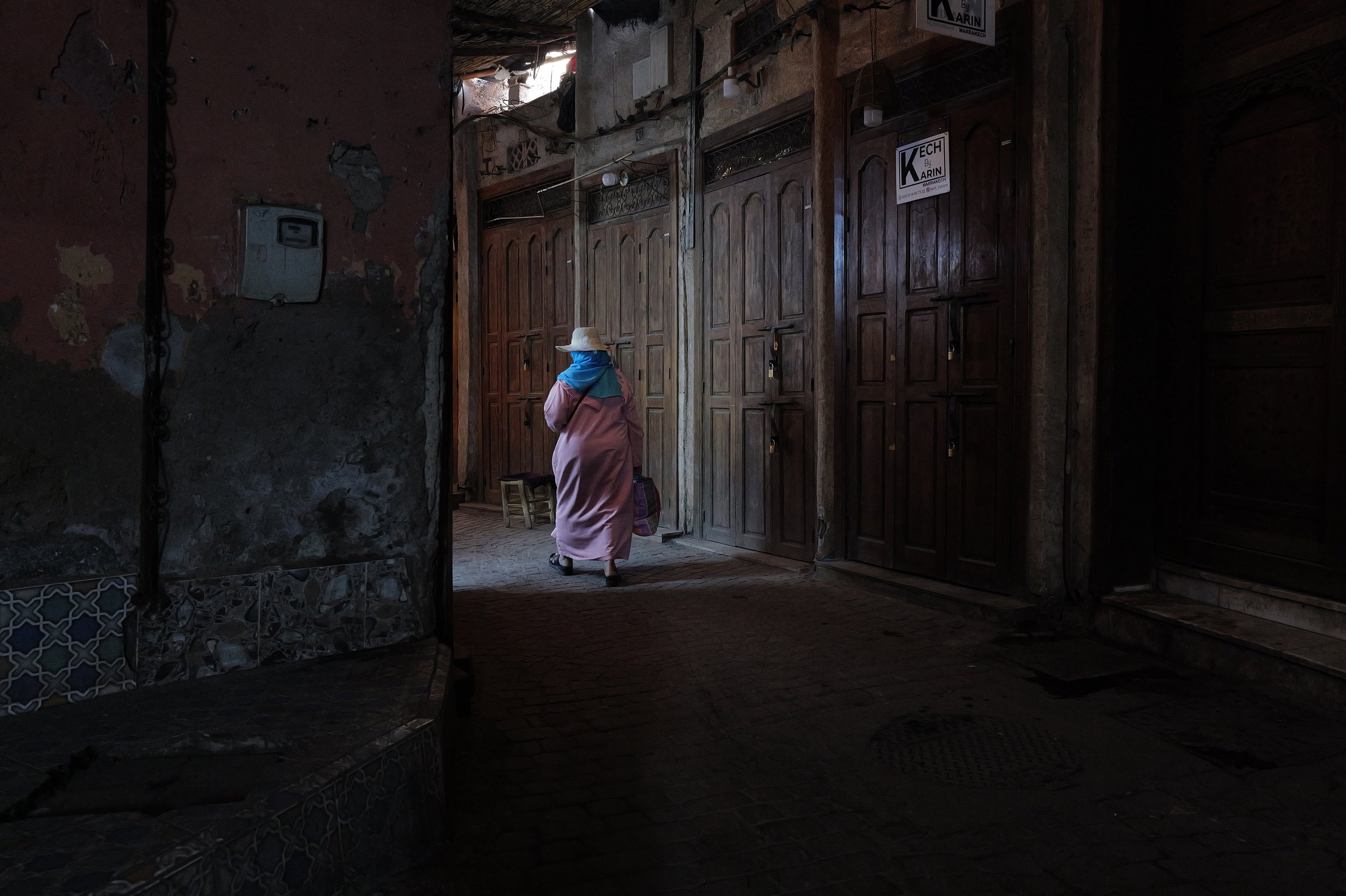
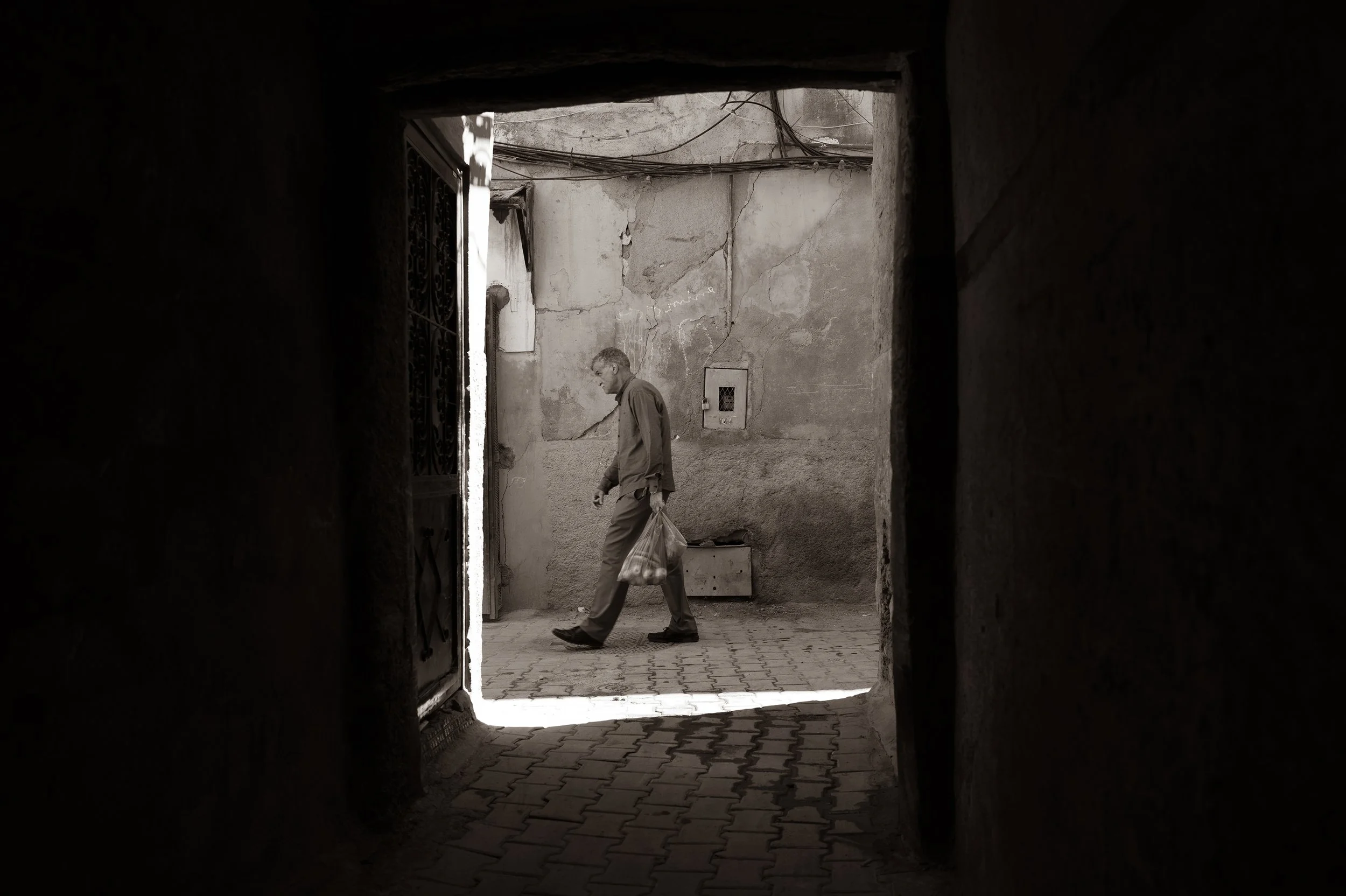
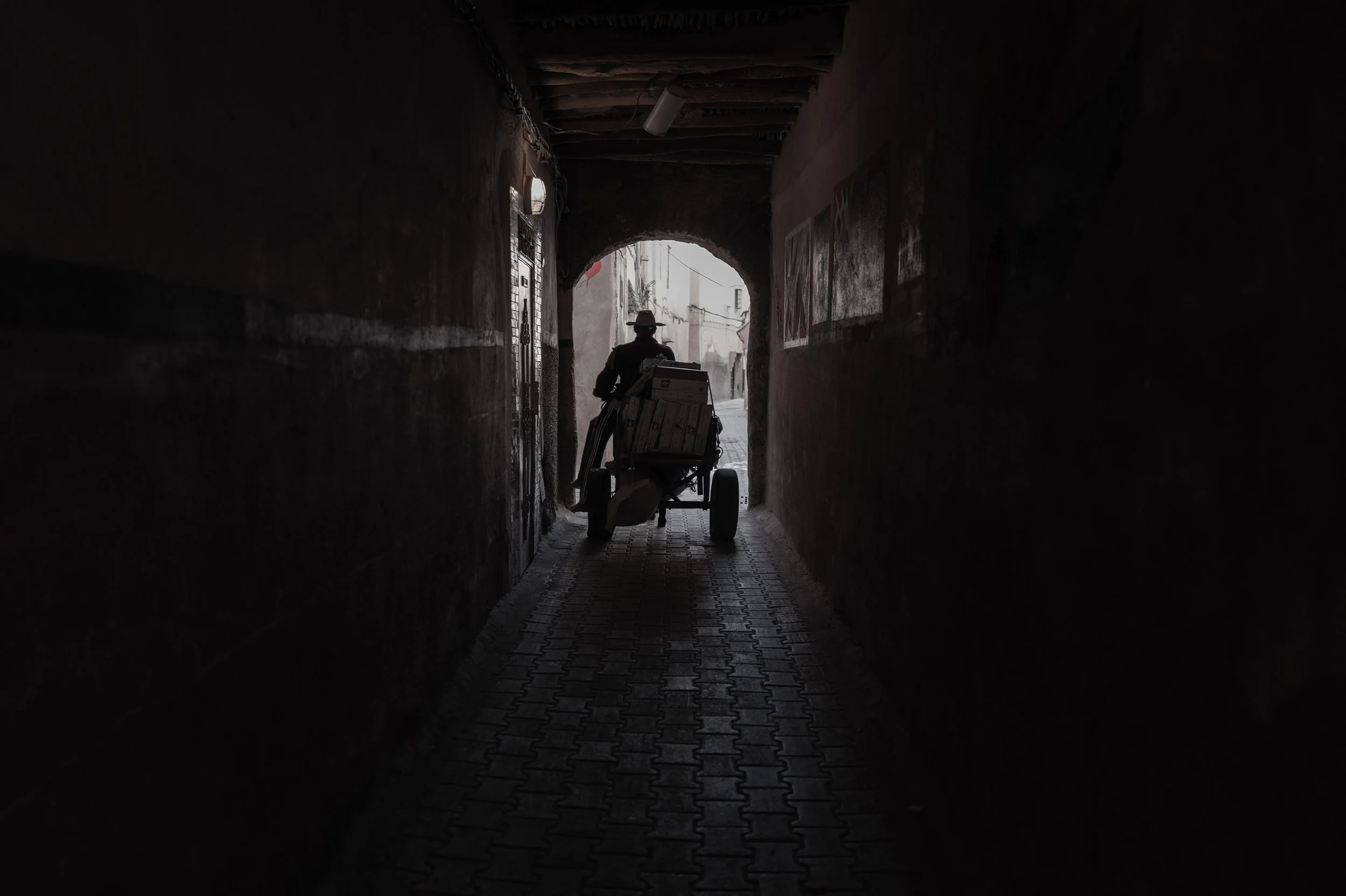
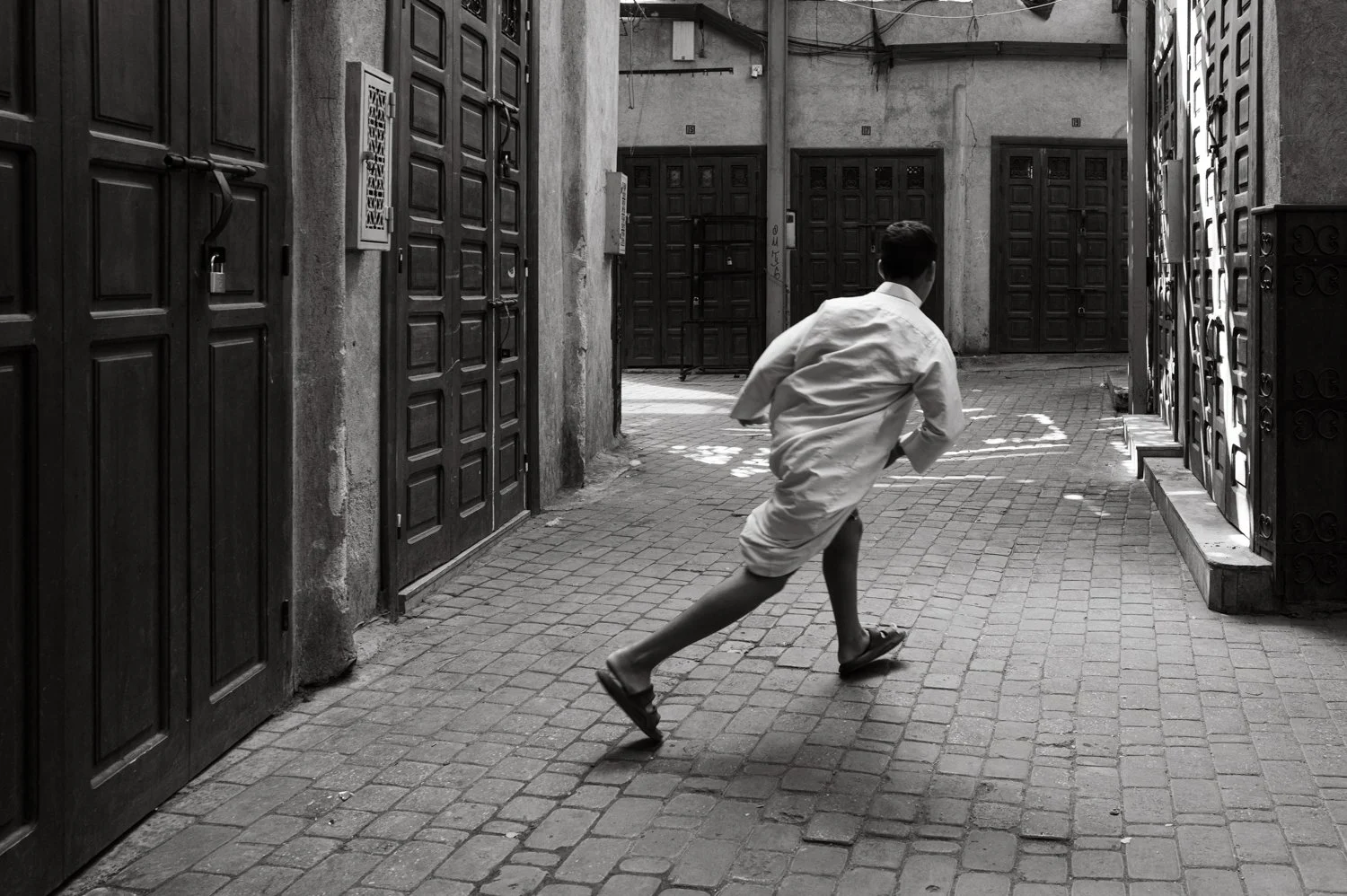
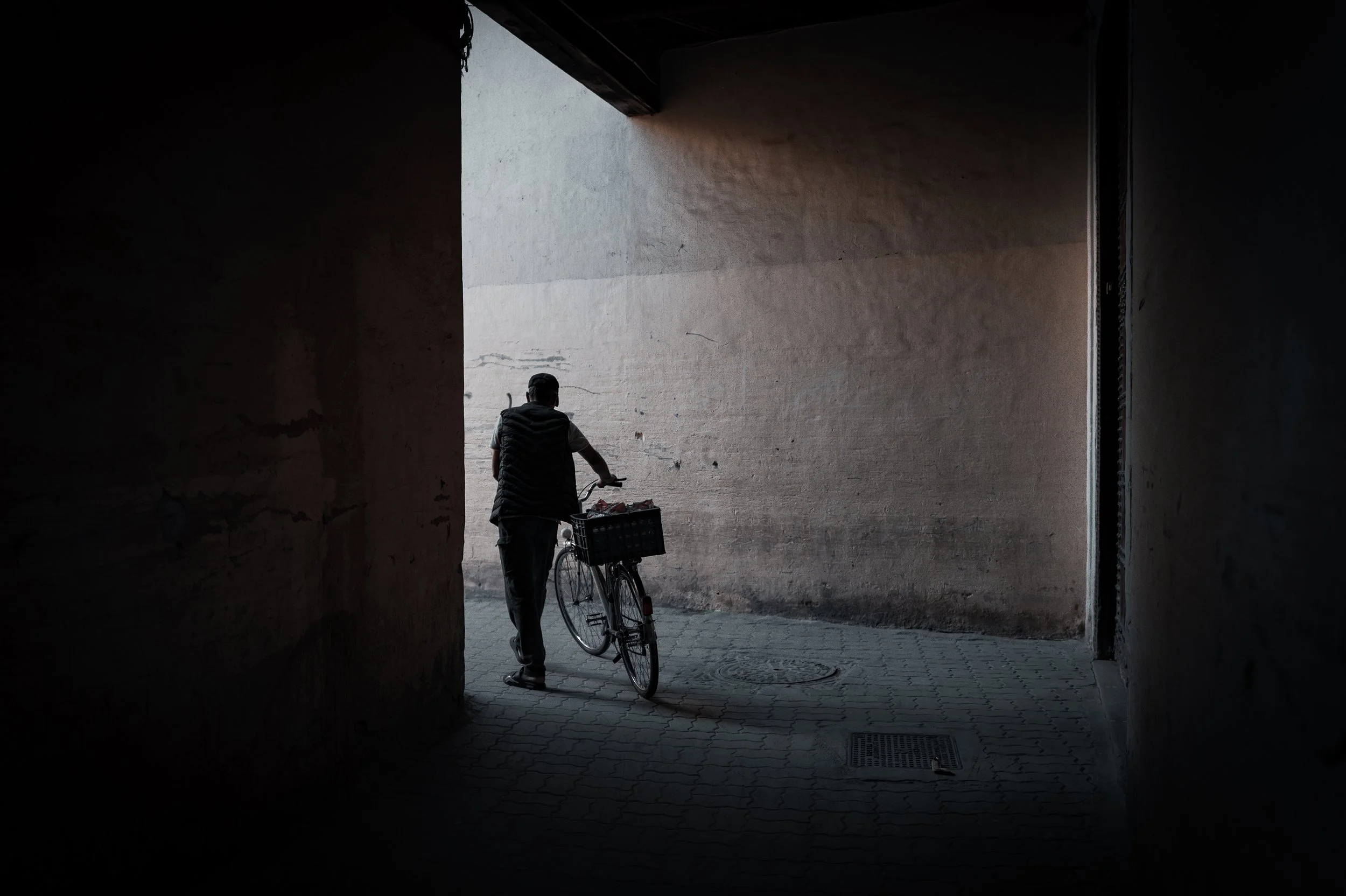
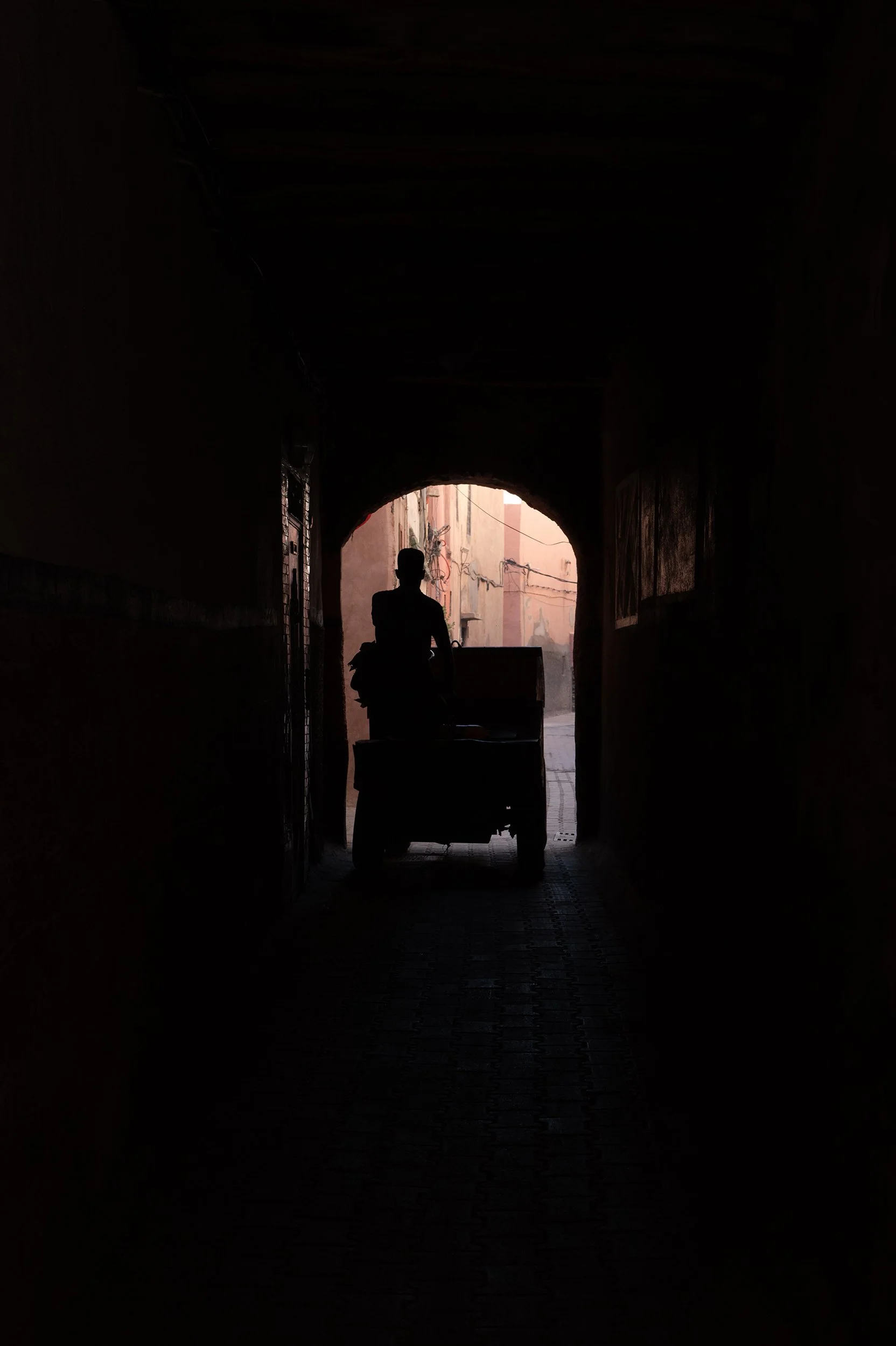
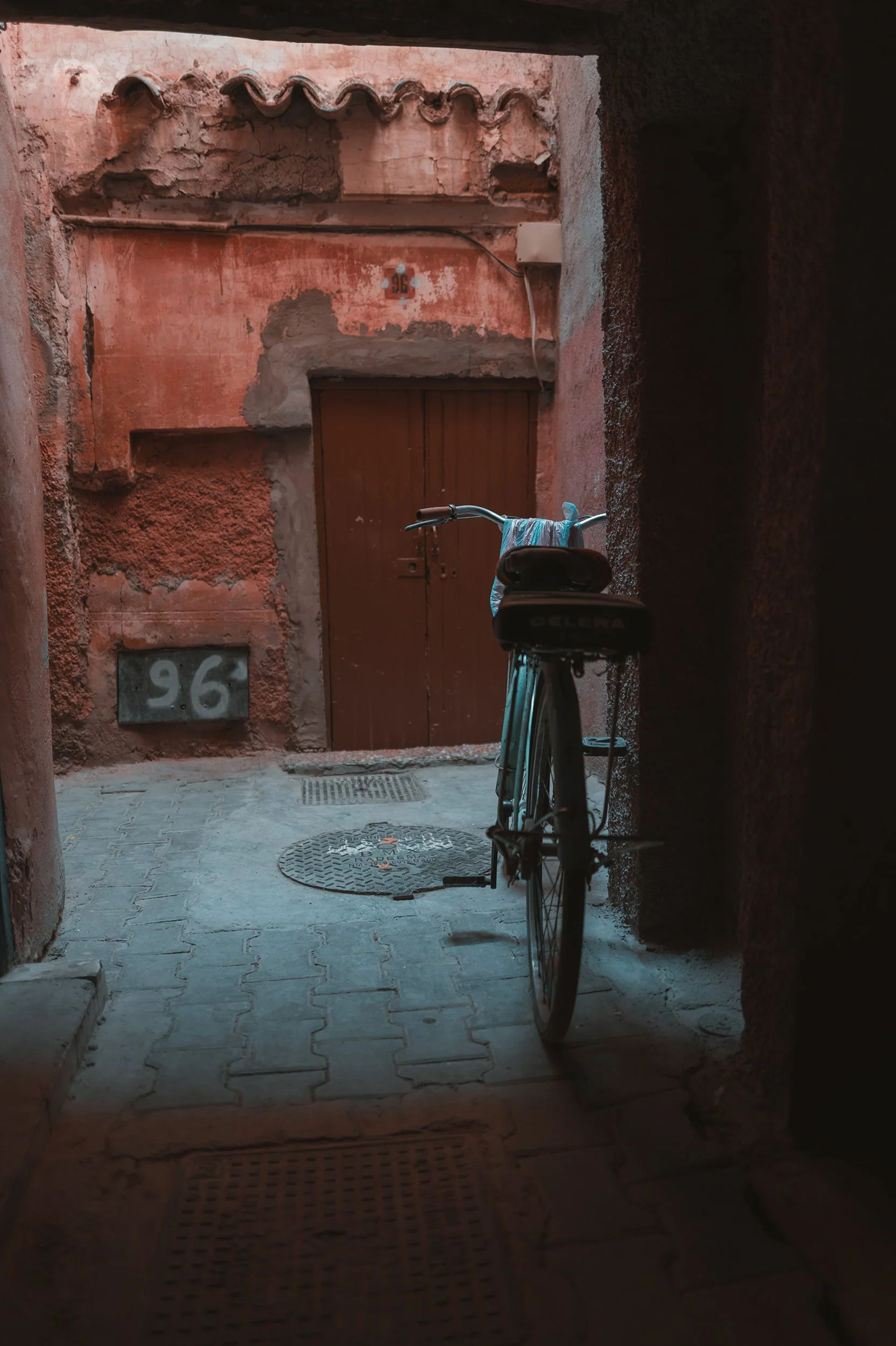
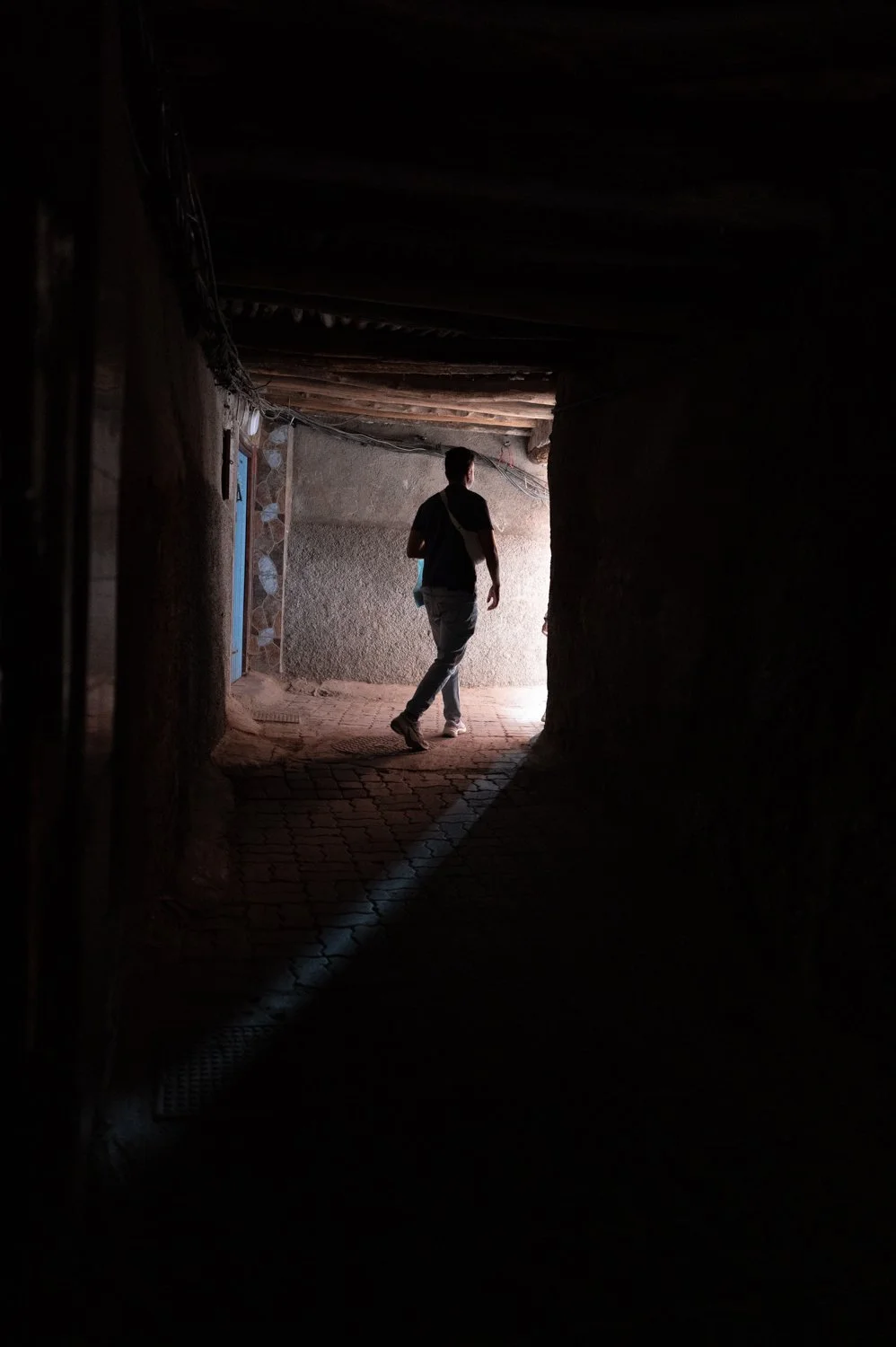
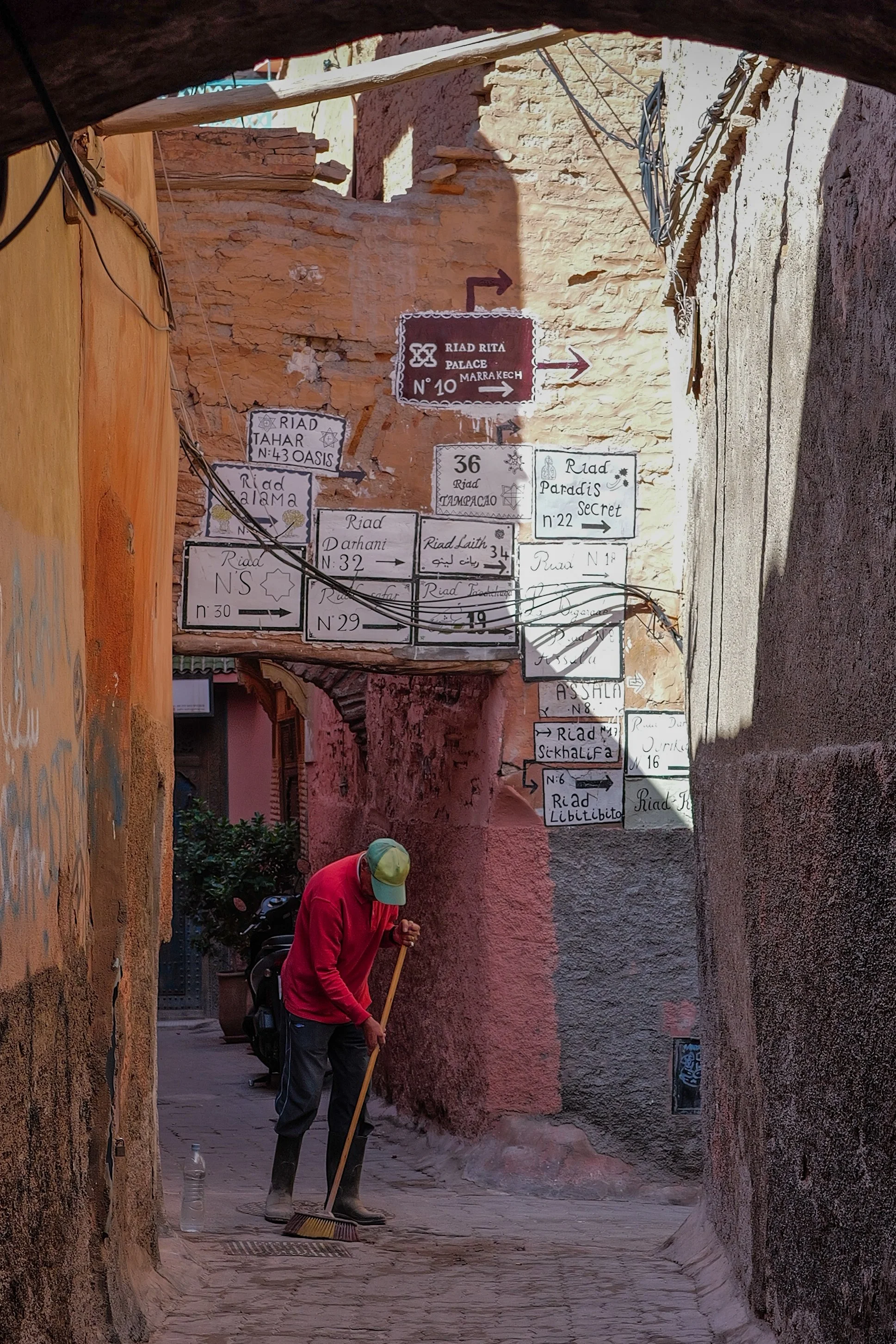
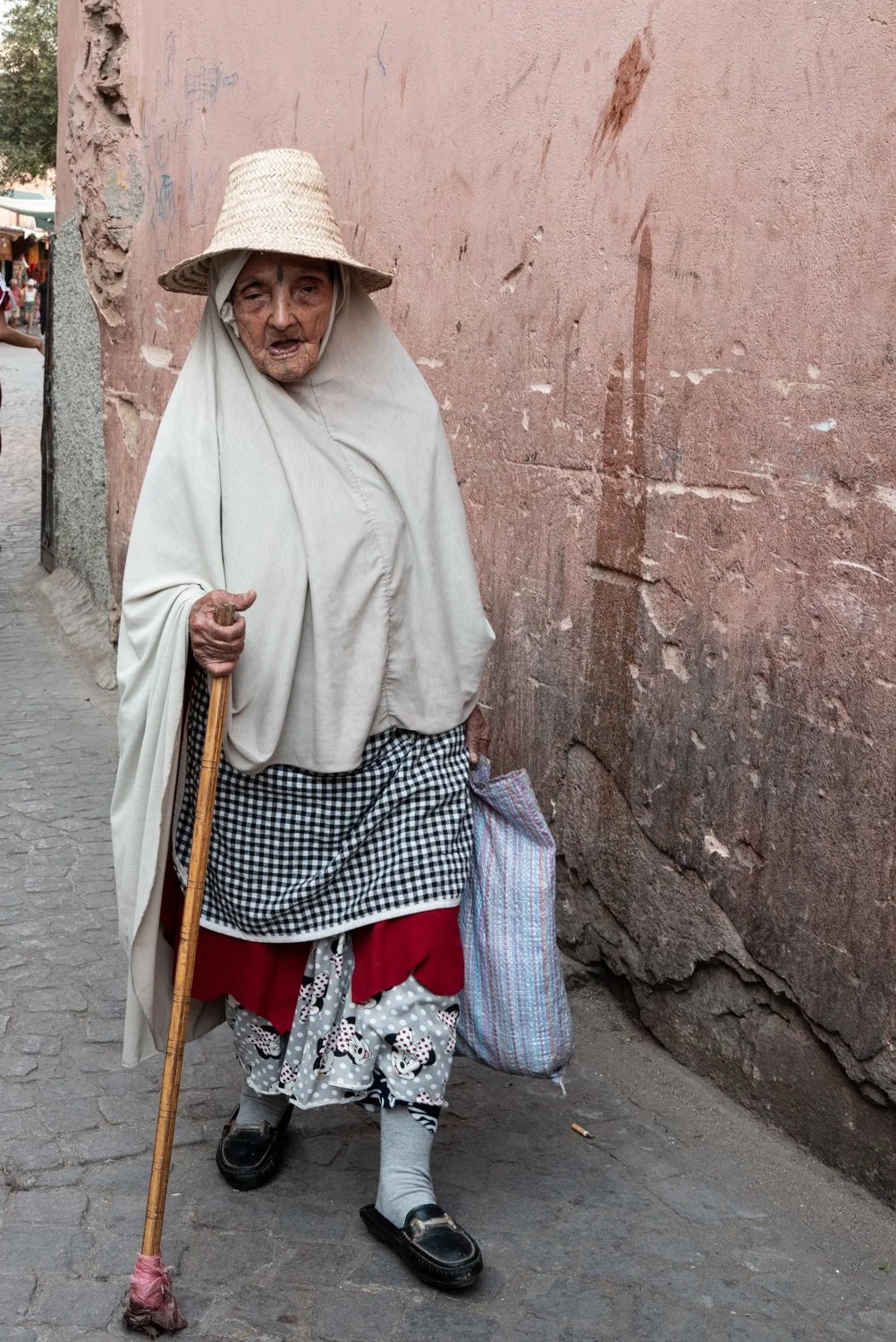
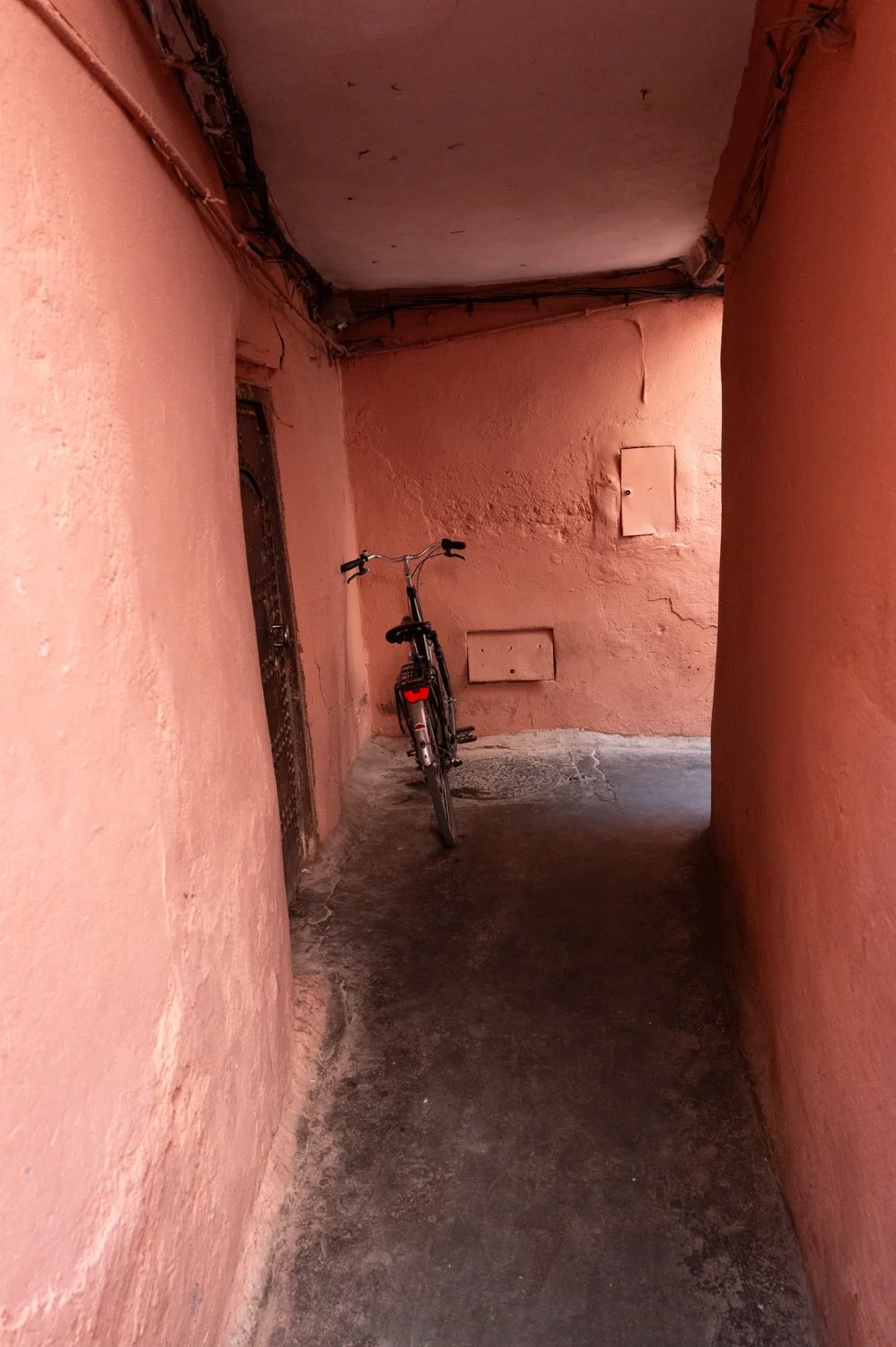
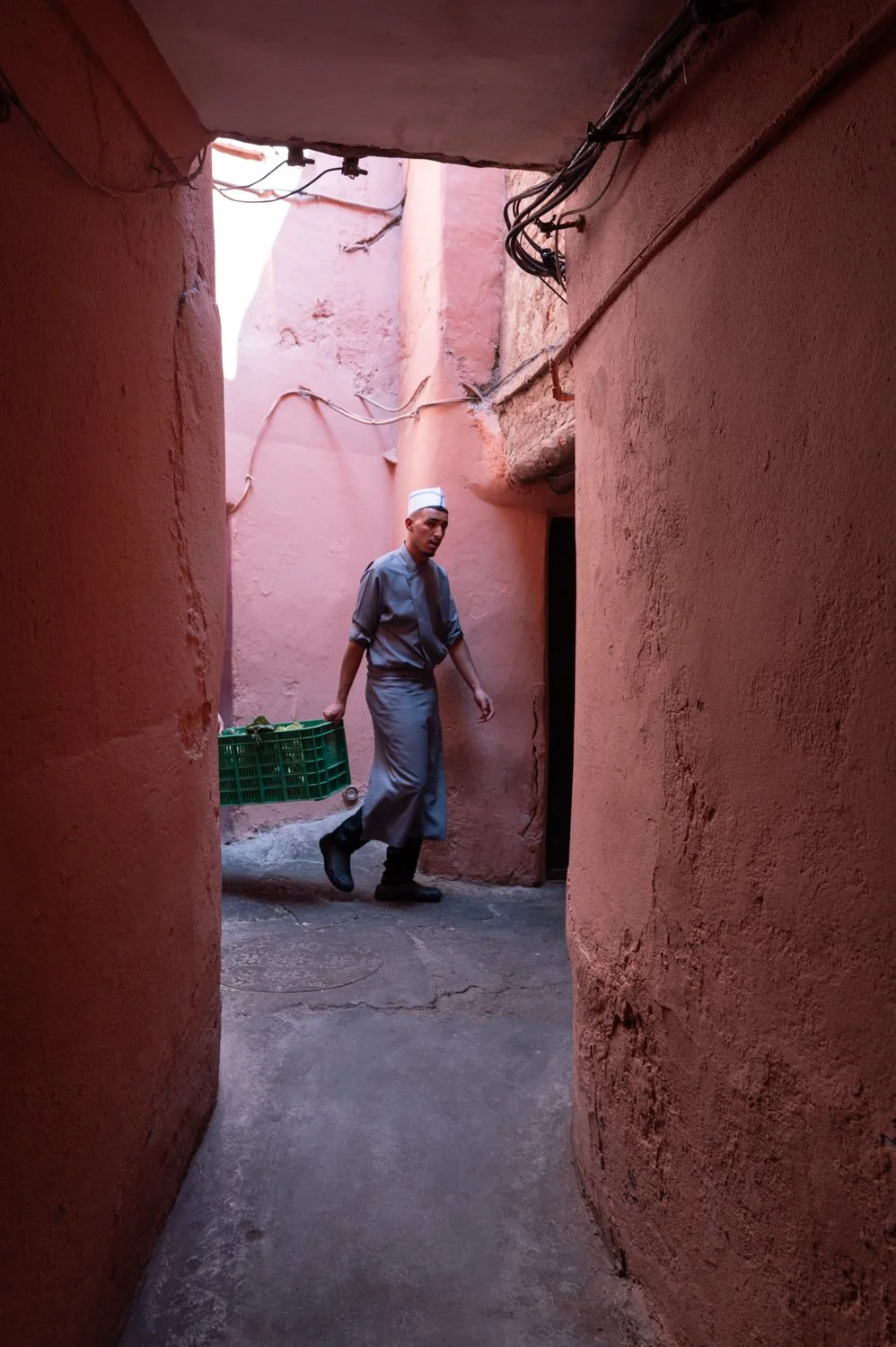
A doorway. A bicycle leaning against a wall. Someone sitting quietly in the shade. A shaft of sunlight entering an otherwise dark alley. A man walking home. A child disappearing around a corner.
Those were the moments I was looking for.
Street photography, at least for me, begins with that curiosity.
What is around that corner?
What happens if I walk another fifty metres?
What is at the end of that alley?
Patience
Then comes patience.
You sometimes find what feels like the perfect frame.
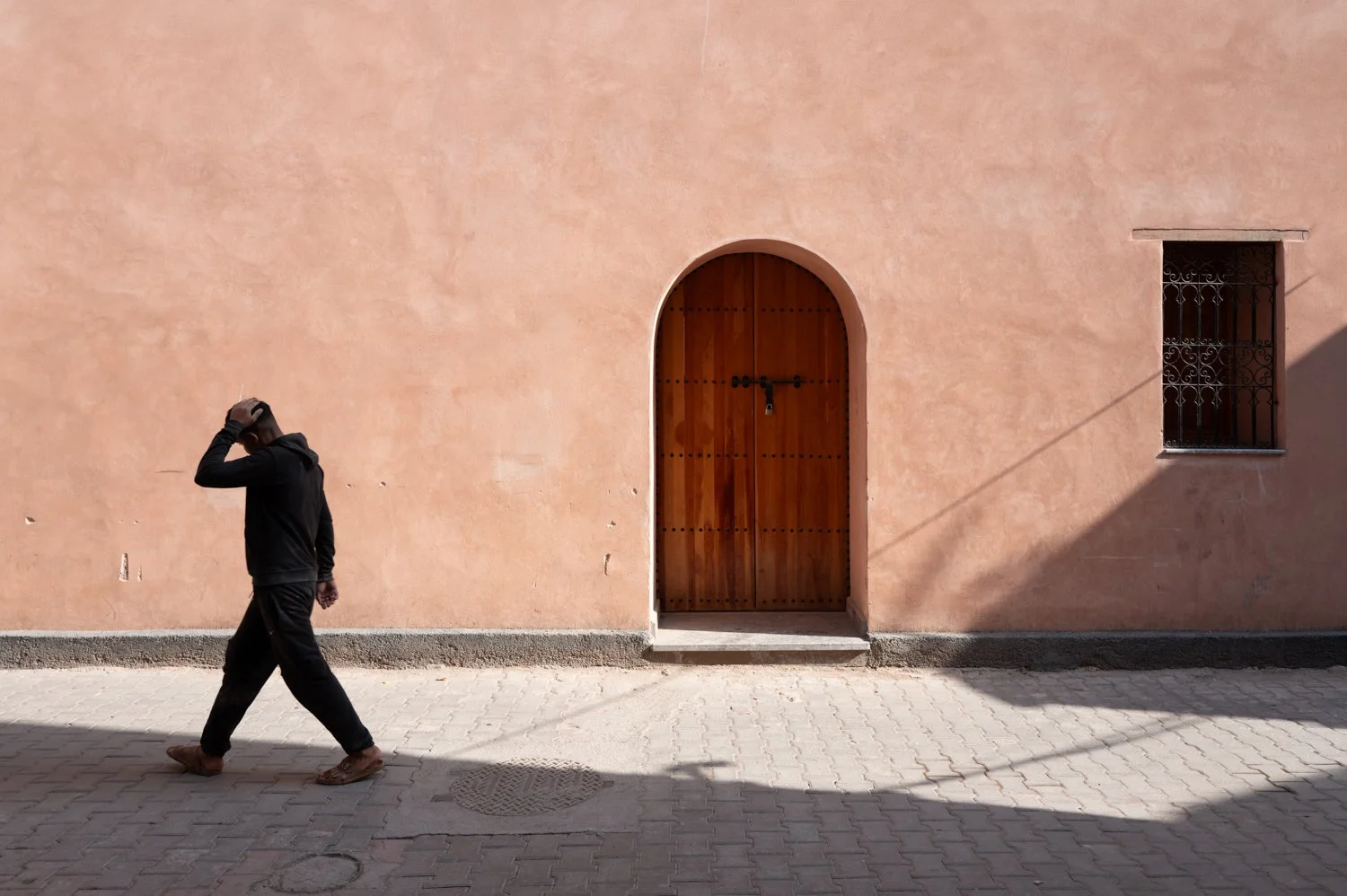
The architecture works. The colours work. The composition is right. Most importantly, the light is exactly where you want it.
There is only one problem. There is nobody there.
And street photography, in most cases, needs people.
So you wait.
I often stayed in exactly the same place for fifteen or twenty minutes. Nothing happening. People passing in the wrong direction.
Someone wearing something that simply did not work with the scene.
Someone stopping exactly where I did not want them to stop.
And then, finally, the right person appears.
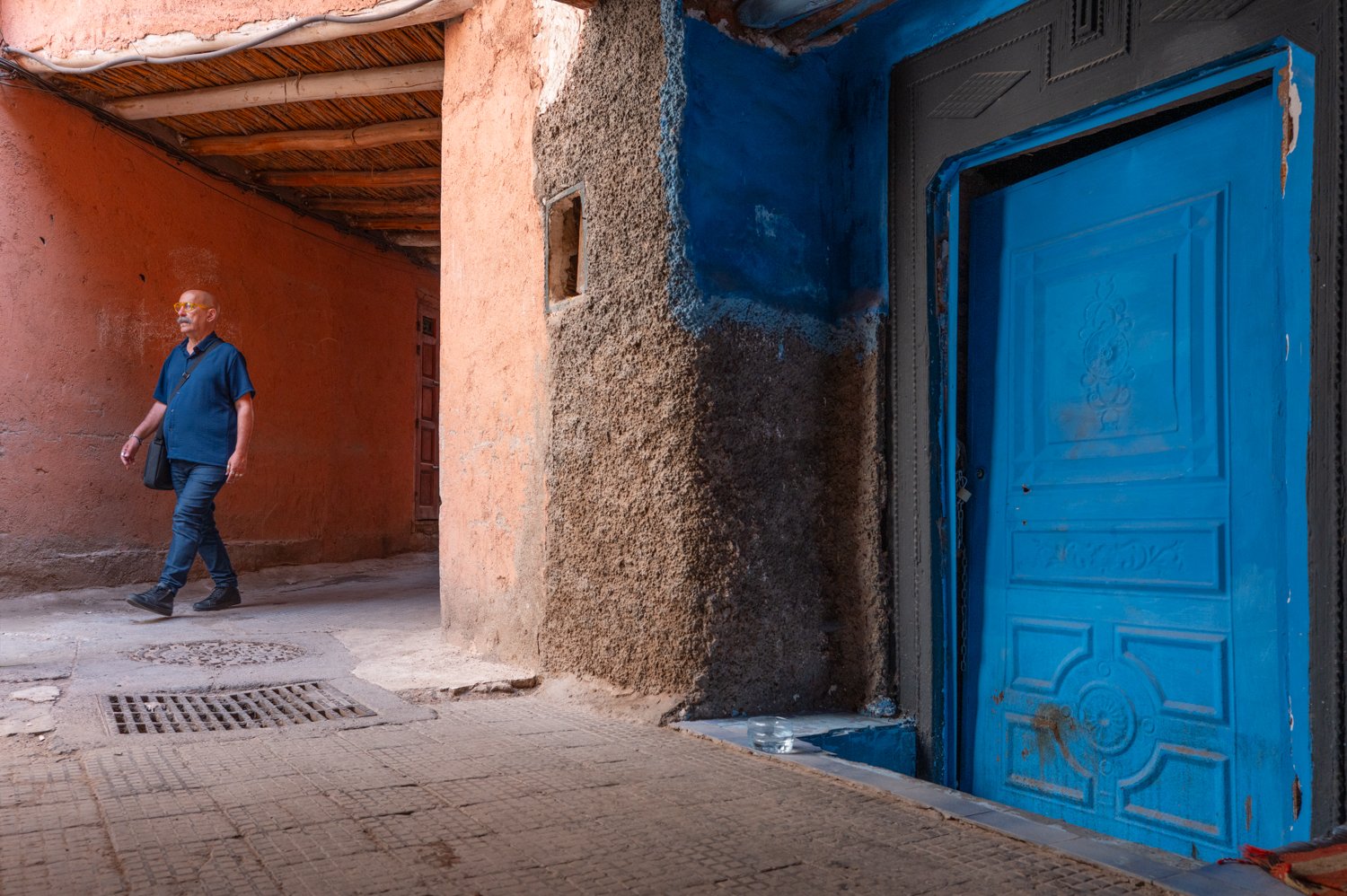
Maybe it is the colour of their clothes. Maybe it is the way they walk. Maybe it is their silhouette.
Maybe they happen to enter the light at exactly the right second.
You only need one person. And one second.
But you might have to wait twenty minutes for it.
Deception
Then there is deception.
Or perhaps a better word is misdirection.
Moroccans are not particularly known for enjoying being photographed, especially at close distances, and I never wanted to turn every photograph into a confrontation or a negotiation.
So my approach was very simple.
1- Be there first. 2- Have the composition ready. 3- Know exactly where I want the person to appear.
And then wait.
When someone entered the frame, I would take the photograph without suddenly pointing the camera directly at them or making an obvious movement.
If they noticed me, the photograph had usually already been taken.
And then I would continue photographing the wall, the doorway or the street for a few seconds after they passed.
Almost as if they had accidentally walked into my photograph of the area.
They were not the subject. Obviously.
They were just an inconvenience.
At least that was the impression I tried to give. It is a small piece of street-photography theatre.
The important thing is to anticipate the photograph before the person becomes aware of you.
1- See the frame.
2- Prepare.
3- Wait.
4- Shoot.
And continue behaving exactly as you were behaving before.
Done.
Physical Resistance
Marrakesh also requires physical resistance.
During each of the three days I walked more than 24,000 steps.
And those are not 24,000 easy steps.
The Medina is constantly changing direction. Narrow streets, crowds, motorcycles, bicycles, uneven surfaces, heat, noise and constant visual stimulation.
I stopped occasionally for a coffee. Sometimes for a juice in Jemaa el-Fnaa.
And that was basically it.
Then I kept walking.
I had no interest in spending half an hour looking at the monkeys or the snake charmers in the square. I barely looked at them.
I did not travel to Marrakesh to be annoyed by people trying to sell me things, place something in my hands or convince me that I desperately needed a photograph with a monkey.
I was not there to be a tourist. I was not there to be distracted by tourism. I was there to photograph.
That difference in mindset matters.
When photography is the purpose of the trip, you walk differently. You look differently.
You constantly scan the light, the backgrounds, the people and the possibilities.
And after several hours, that becomes surprisingly exhausting.
Not just physically.
Mentally too.
Focus
Which brings me to the final ingredient.
Focus.
Marrakesh can be incredibly distracting.
Every few metres something is competing for your attention.
Colours. Sounds. Shops. Food. Motorcycles. Tourists. Vendors. Architecture.
But if you are photographing seriously, you have to filter most of it out.
You have to keep asking yourself one question:
Where is the photograph?
Sometimes it is directly in front of you.
Sometimes it is fifty metres away.
Sometimes it is down the alley you almost ignored.
And sometimes the photograph does not exist yet.
You have found the stage.
You have found the light.
You have found the composition.
Now you simply have to wait for the actor.
Different Characters, Similar Streets
Looking through the photographs afterwards, I noticed something interesting.
Some of my favourite images look quite similar.
That is inevitable.
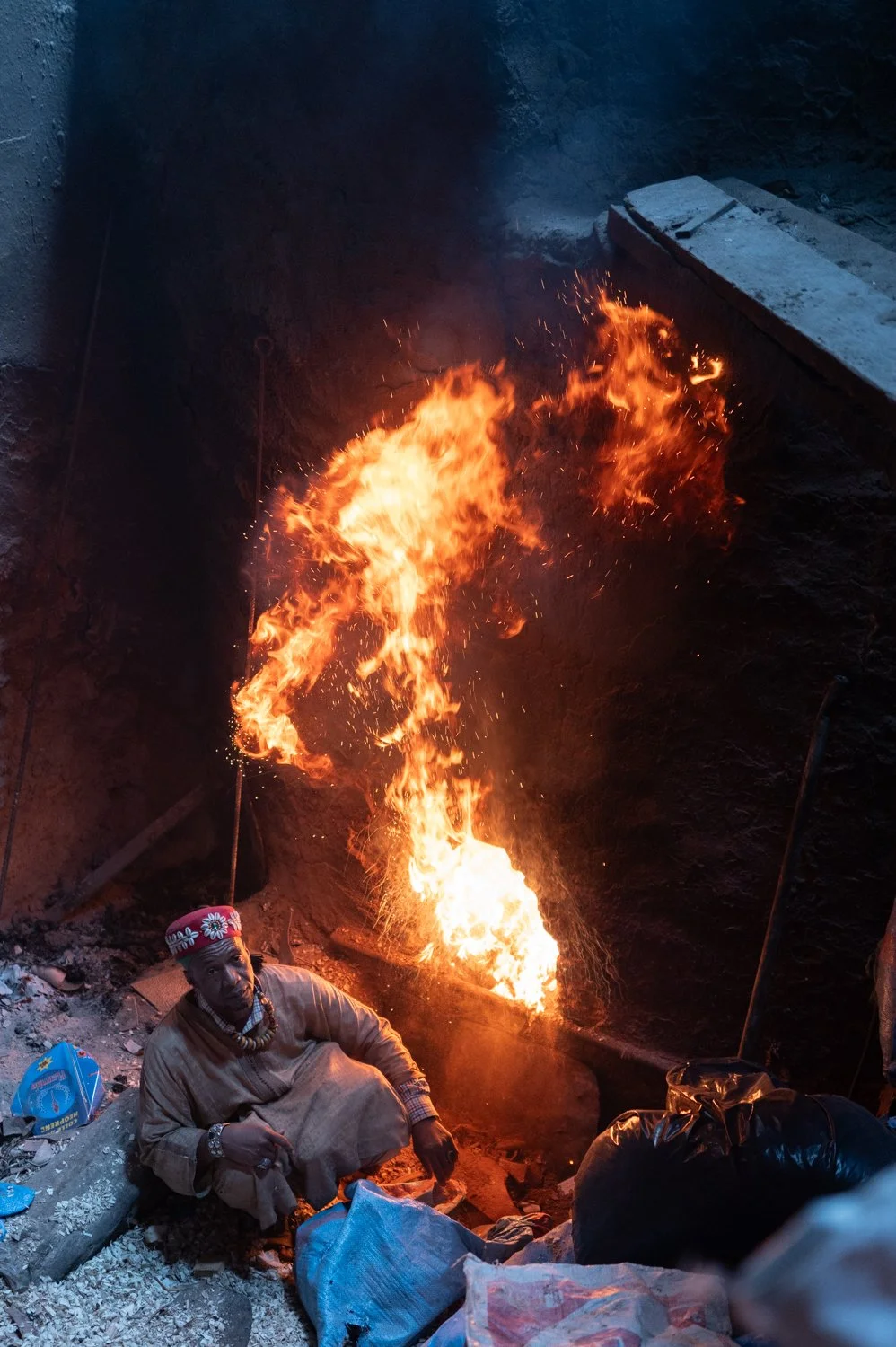
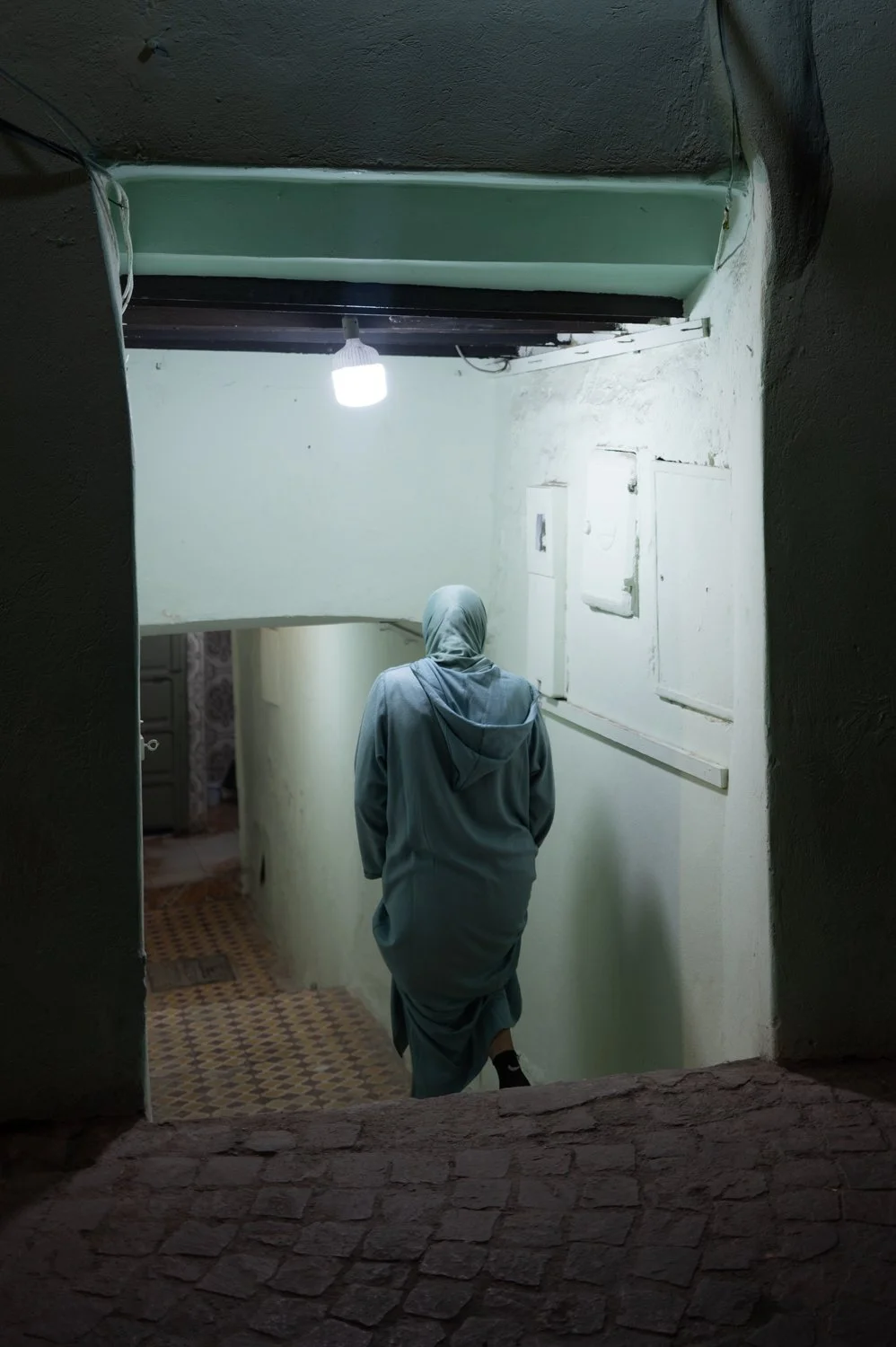
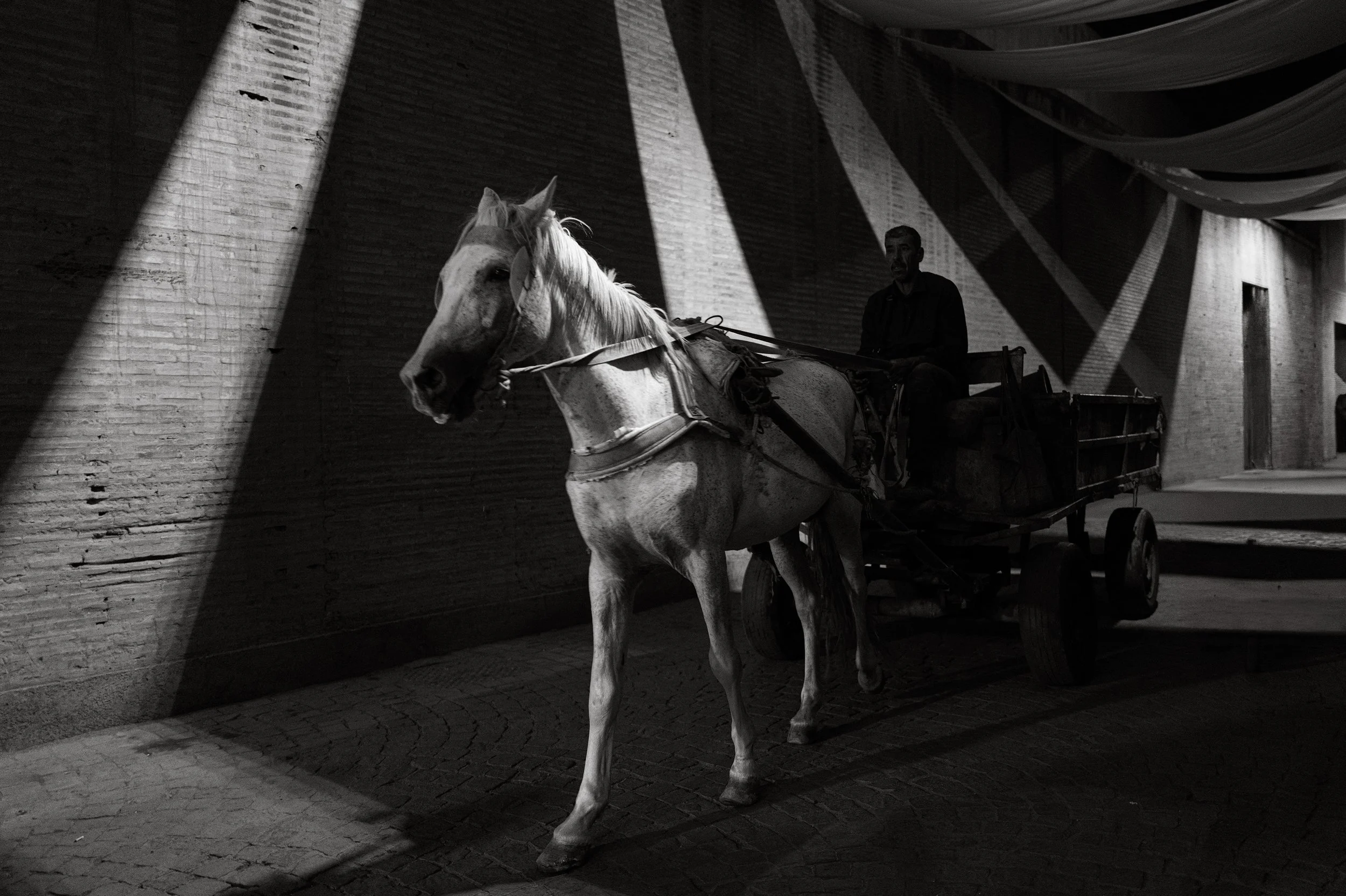
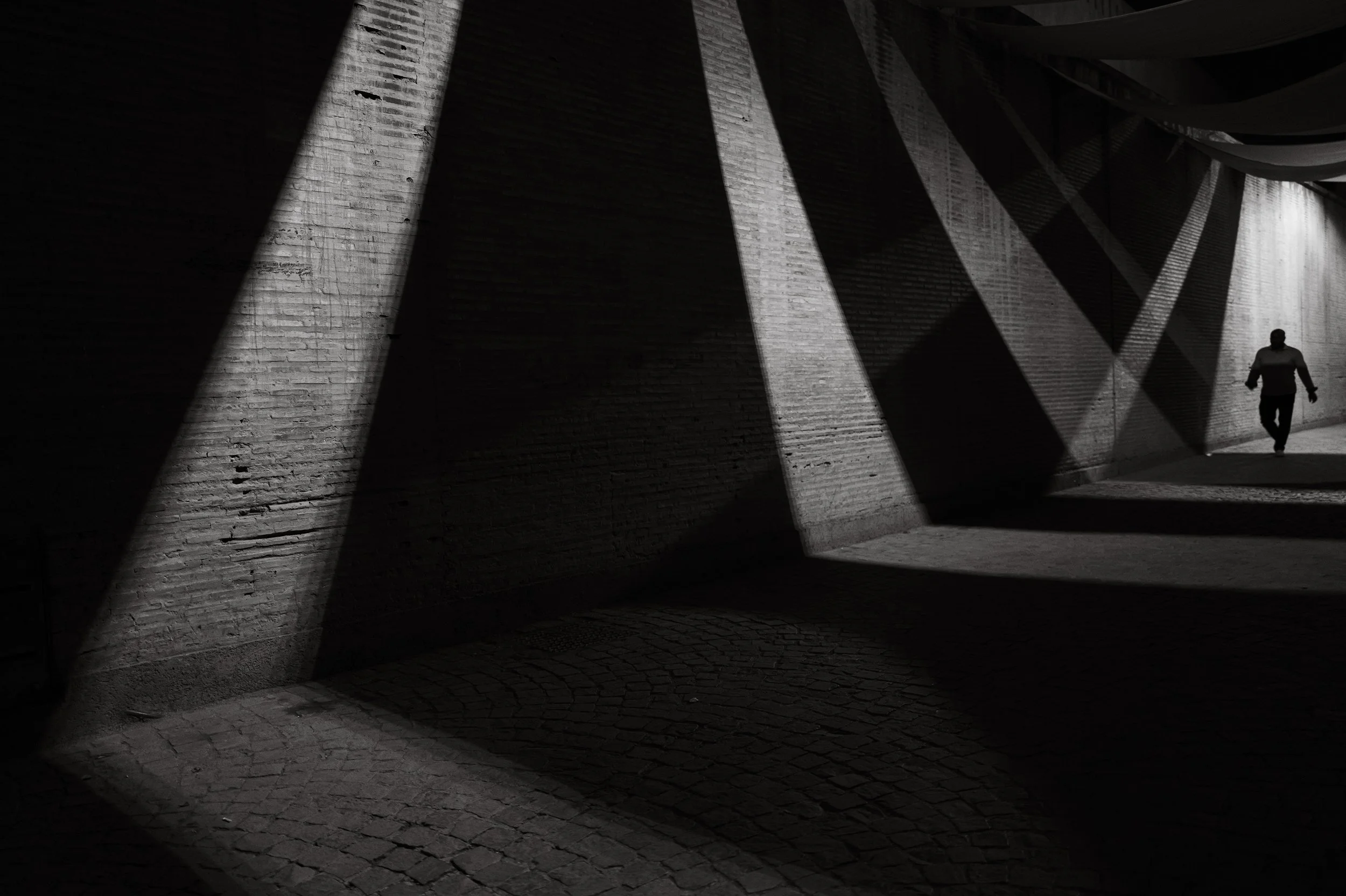
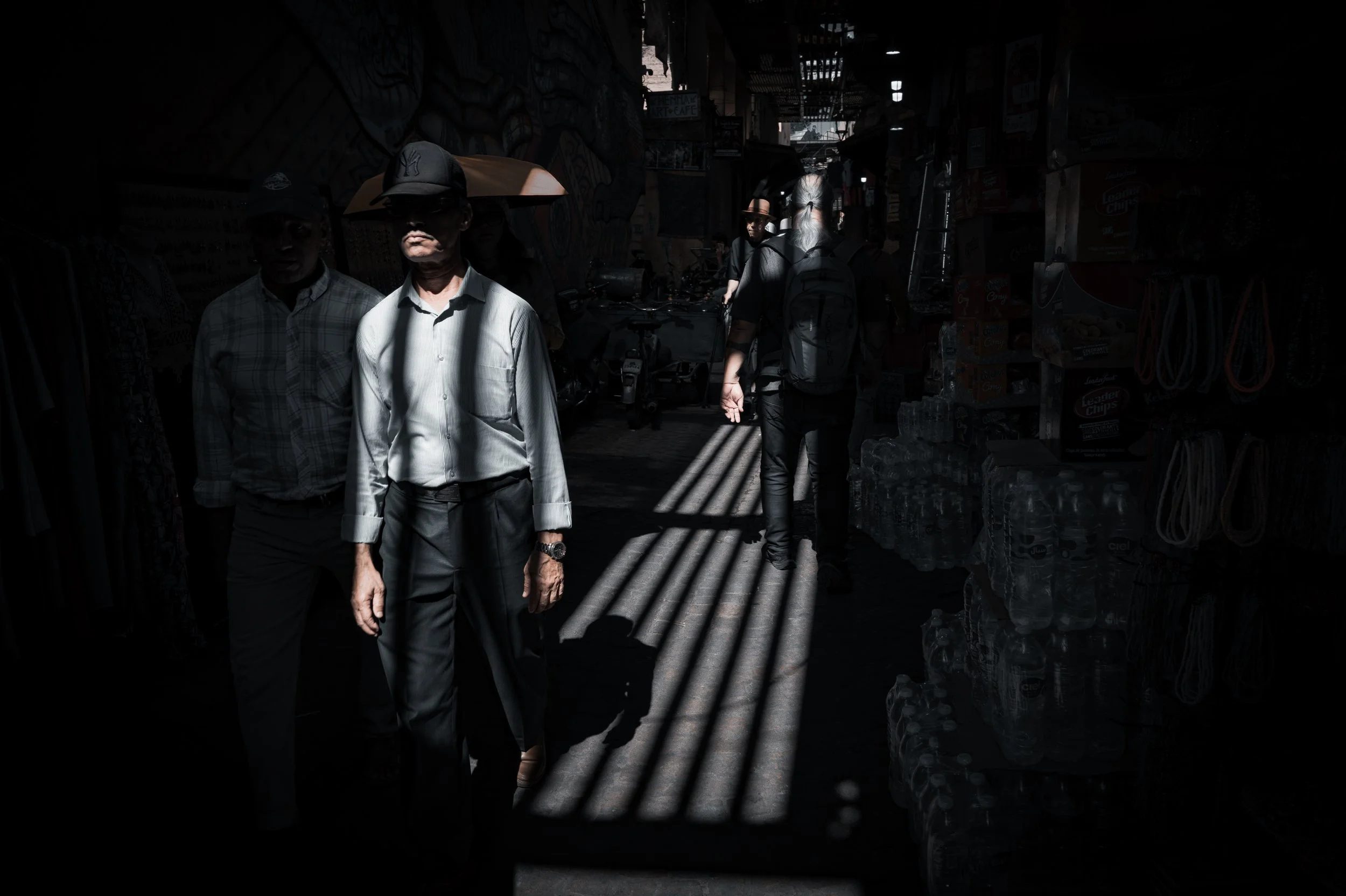
Many of the Medina alleys share the same visual language: narrow passages, textured walls, dark interiors and intense shafts of light.
But the photographs are never really identical.
The character changes.
The light changes.
The gesture changes.
The timing changes.
One photograph might have an elderly man walking slowly through a beam of sunlight.
Another might have a young boy moving quickly through exactly the same kind of space.
Same stage.
Different story.
And perhaps that is part of what makes photographing Marrakesh so addictive.
You begin recognising certain types of scenes, but you never know who will walk into them.
Three Days, One Purpose
For three days, my routine was simple.
Walk. Look. Turn into an alley.
Walk some more. Find the light.
Stop. Wait.
Take the photograph.
Move on. Repeat.
There are easier ways to experience Marrakesh. There are certainly more relaxing ones.
But for me, the best part of the trip was precisely this constant search.
Photography gave the city a completely different rhythm.
I was not simply moving through Marrakesh. I was hunting for small moments inside it.
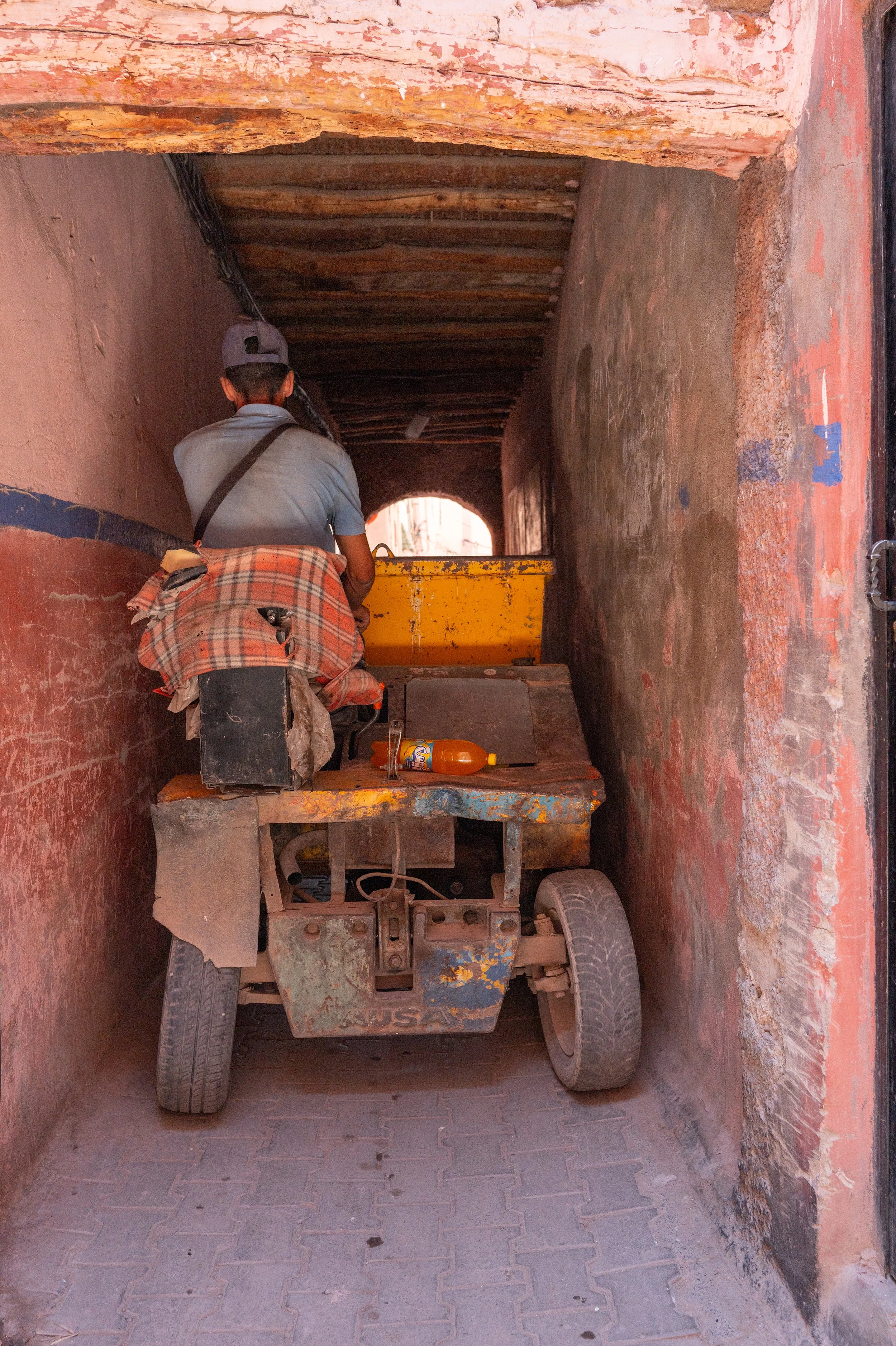
And sometimes all it took was a quiet alley, fifteen minutes of patience and one person walking through the right patch of light.
Click.
Done.
Why the Leica Q3 Worked So Well in Marrakesh
The Leica Q3 felt almost purpose-built for this kind of trip. Marrakesh rewards photographers who can move quickly, stay discreet and travel light, and the Q3 does all three exceptionally well. It is small enough not to attract too much attention, light enough to carry around my neck for an entire day, and simple enough that I never felt I was fighting the camera instead of concentrating on what was happening in front of me. On a trip where I was walking more than 24,000 steps a day, I was particularly grateful not to be carrying a bag full of lenses and equipment.
I also used the digital zoom far less than I normally do. In the Medina, the streets and alleys are often so narrow that there is simply not much room between you and your subject. The native 28mm field of view was therefore ideal for most situations, allowing me to include enough of the surroundings while still keeping people as an important part of the frame. Most of the time, moving a few steps forward or backwards was all the adjustment I needed.
Throughout the trip I kept the camera almost permanently in AFs, using Zoom / Multi-Field AF. I wanted the camera to remain predictable and fast, particularly because many of the photographs depended on someone entering a very specific part of the frame for only a second or two. Once I had found the composition and the light, I could concentrate entirely on timing rather than constantly changing settings.
The Leica FOTOS app also became an unexpectedly useful part of my approach. There were situations where even raising the camera to my eye would have immediately changed the scene. Instead, I would leave the Q3 hanging naturally from my neck, keep one hand resting on the camera to subtly control its direction, and look down at my phone. Through the app I could see the live view and release the shutter directly from the screen.
To anyone walking past, it simply looked as though I was checking my phone.
The camera was there, visible, but it did not look as though I was actively photographing anyone. That made it possible to preserve completely natural gestures and expressions without announcing the photograph before it happened.
For this kind of street photography, that discretion is invaluable. The Q3 never became the centre of attention. It simply stayed with me, ready when I needed it, allowing me to concentrate on the city, the light and the people rather than the equipment.
And that is probably the greatest compliment I can give a camera on a trip like this: most of the time, I almost forgot it was there.